![[personal profile]](https://www.dreamwidth.org/img/silk/identity/user.png) lunasariel
lunasarielHappy spring, y'all! Life has been proceeding apace here; enough so that I will probably have to do an entirely separate IRL update post. But, in the meantime, books!
Paladin's Hope was the Paladin book I was most looking forward to reading, and, sadly, the one I enjoyed reading the least. It had this kind of... rushed, unfinished quality, where there were a couple of important elements that could have used more fleshing out, and it relied more heavily on tropes than usual in ways that worked against it rather than for it.
I was looking forward to PH the most out of the three because it's the first of T. Kingfisher's romance-esque books to deviate from the "meek, practical woman is threatened by shadowy forces and protected by emotionally wounded badass dude" model that she clearly loves (more on this below). Which isn't bad, mind you - I do love a good paladin, and I'll take knightly devotion over, say, enemies-to-lovers any day, but I was hoping that the fact that this is a m/m romance would mean that some of T.K.'s writing tics that annoy me would be less present or nonexistent. Well, turns out it went in rather the other direction. XD
...which is a very grim way to start out a book that I, on the whole, actually rather liked. I LOVED the first, say, 2/3. Galen and Piper are thrown into a death trap maze after several months of simmering mutual attraction, and are forced to rely on each other and problem solve together in a way that was just *chef's kiss*. Like with the previous two Paladin books, their reasons for being reluctant to get together made sense - Piper is a coroner who can view a corpse's last moments by touching it, and Galen is a traumatized paladin of a dead god who goes into a berserker frenzy if he's touched while he's asleep; both of these things might reasonably give one pause. But they get together much more quickly than Stephen and Grace or Istvhan and Clara, and with a *lot* less "But I Mustn't" back-and-forth. And they work well, both as friends and as lovers - there's definite chemistry, but they also respect each other to be experts in their various fields, and they problem-solve well together, which leads to an awful lot of Competence Porn, which I am far from against. ;) In particular, I really liked their (OK, Earstripe's) solution of using apples to trigger the various death traps, and since they can't actually see the death traps activate, drawing conclusions from the state of the apple (smashed, sliced, gone, etc.) about the trap itself. They're also comparable levels of Snarky Bastard(TM), are very clearly "...hey ;)))" at each other, even in Adverse Circumstances, and extremely good at comforting one another/shoring one another up. So, pretty much everything I could ask for in a ship.
Things kind of took a turn for the worse at about the two-thirds mark. At this point they've defeated the death maze, apprehended the villain, and saved a badly-injured friend. The latter of which was one of my favorite parts, btw! See below for where this concept starts to break down, but I really liked that Piper was very "OKAY FIRST OF ALL most of the people I operate on are already dead, so this is kind of new territory for me. SECOND AND MUCH MORE IMPORTANTLY I've never operated on a non-obligate biped before; where the fuck is his femoral artery?? Because it would be in one place if he was a biped and a different one if he was a quadruped and he isn't either AND THIS IS VERY IMPORTANT INFORMATION GIVEN THE CROSSBOW BOLT STICKING OUT OF HIS LEG! His noise is cold! Is that a good thing? A bad thing? Normal? Abnormal? I don't know, I've never touched his nose before!"
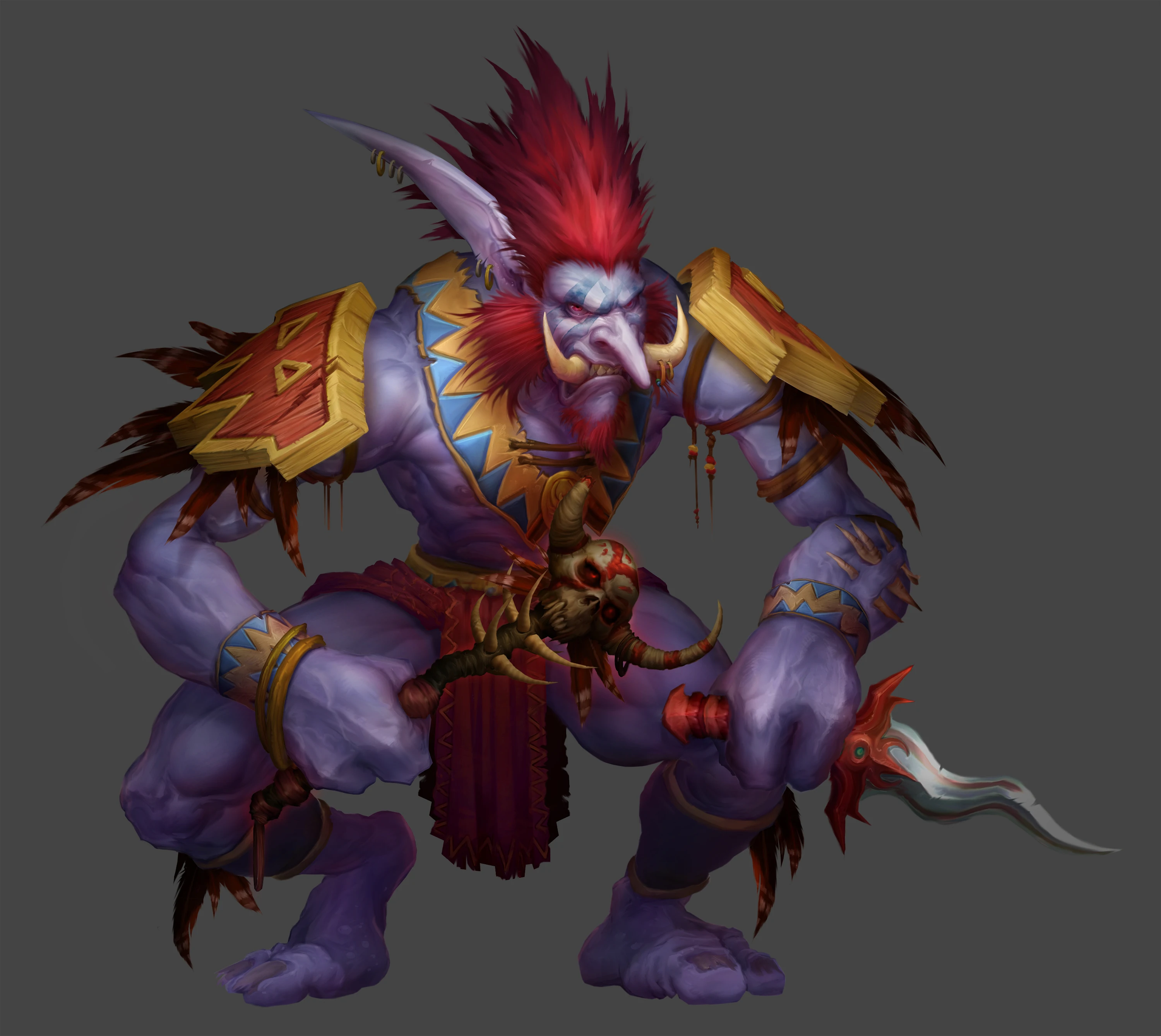
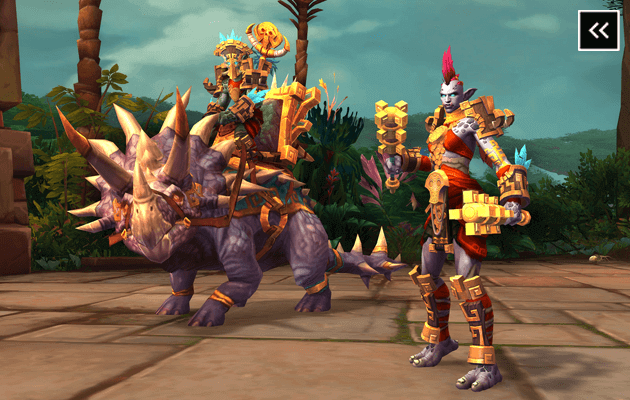
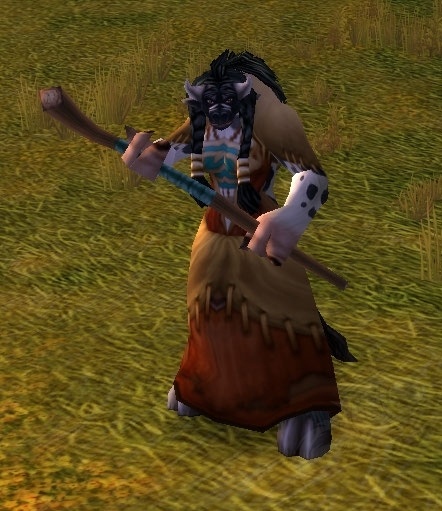
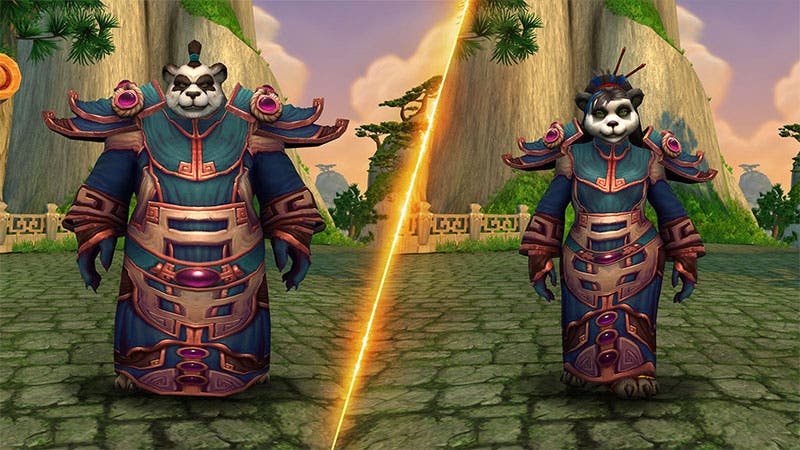
While fun and a great character moment in and of itself, this brings up another thing I didn't care for - gnoles have become stand-ins for marginalized communities/The Other (humans). T. Kingfisher gets remarkably un-subtle about it here, whereas she was kinda hinting towards it in previous books but it wasn't, like, a major plot point or anything. But here, it was very front and center - one of the first in-text moments we get of Piper being all *HEART EYES, MOTHERFUCKER* at Galen is how Galen very obviously defers to Earstripe in professional matters - standing behind him when at rest, waiting for him to speak before speaking himself, asking him for direction, etc. But this gets more and more heavy-handed as the book goes on, and by the last third, when the novel develops Other Problems, it's also really beating the reader over the head with the parallels between gnoles and marginalized human communities - over-policed and under-represented in official power structures, their cultural norms not well understood or respected, stereotyped as stupid/lazy/aggressive, their medical needs not widely understood, etc. For example, it's made very explicit that the usual gnole "accent" is seen as not respectable or intelligent, and younger gnoles are starting to lose their "accents" in order to better fit into the dominant human culture. But what occurred to me this time is, isn't it a bit insulting to draw very heavy-handed parallels between IRL BIPOC folks and literal non-human fantasy creatures? This is something I've also noticed in my beloved WoW, which, while certainly beloved, is definitely not without its Issues, most noticeably that the humans are, culturally speaking, white Anglo-Americans, and other non-human races take on attributes of Everybody Else - Caribbean trolls, Aztec and/or Mayan Different Trolls, Indigenous/Native American tauren, African orcs, Chinese pandaren, and so on. Like, representation in video games is great and all, but non-Anglo-American culture only showing up as the literal monsters is... increasingly not a good look. And in Paladin's Hope, I can see what T.K. was going for, but it felt heavy-handed and misguided, if well-intentioned. (And that's not even touching on how the previously-reasonable and decently honorable Captain Mallory has taken a dose of ACAB and become a raging Fantasy Racist). IDK, it just felt like IRL current events intruded on the novel in a way that wasn't true to the story, but was more a way for the author to work out her anger at the above-mentioned current events (which, to be fair, are/were extremely fucking shitty).
...but I believe I derailed myself from ranting about Piper & Galen into ranting about gnoles. Back to Piper & Galen! So about two-thirds of the way through, Piper and Galen have saved the day, apprehended the villain, and 99% gotten together in the process. They've had sex at least once; they get along great, they know that their feelings for each other are both genuine and deep-running, and they're friends as well as lovers. They're cuddly, jokey, affectionate, and actually astonishingly open with each other. And then, completely out of the fucking blue, Galen decides that I Am Not Worthy of Your Love, and unceremoniously dumps Piper, in the shittiest way possible, For His Own Good. Of course, he doesn't *tell* Piper any of this; as far as Piper can tell Galen just turns around and gives him the ol' heave-ho for no reason at all.
Literally from one page to the next, Galen goes from "I love Piper, he's so smart and fierce and kind and watching him work is a pleasure <3" to "welp, guess I have ABSOLUTELY NO CHOICE but to break his heart and let him think I hate him for some reason. It's kinder this way." There's exactly 0 narrative justification for this!! Even putting aside how much I hate the ol' "this problem could be solved by a five-minute conversation between reasonable adults" trope, it's such a complete 180 from their previous camaraderie. And what makes it even worse is that Galen goes about it in the shittiest way possible, strongly implying that his attraction to Piper was purely physical and that he (Galen) was now bored and ready to move on. I mean, if you do decide that you're putting your lover in physical danger by being around him (which, okay, he does have half a leg to stand on here) and decide to break up with him, if you love him, why do so in a way that leaves him feeling awful about himself? "I couldn't live with myself if I accidentally murdered you in a fit of uncontrollable berserker rage so maybe we shouldn't see each other anymore" is, okay, a stupid-ass decision, but at least that would have a solid narrative foundation. This was just such a complete flip from "everything is fine" to "everything is the worst" for no reason at all, aaaauuuurrrrrgggghhhhhhh!
Of course, the only reason to shoehorn this plot twist in at all was to facilitate the apparently obligatory third act breakup-makeup that T.K. seems to love. And this certainly was an excellent example of that - lots of angsting all over the place, Galen getting a well-deserved smacking from his friends and making several extravagantly grovelling apologies, and the eventual makeup sex. All of which was completely fucking unnecessary, aurgh! I knew I would have to pay for how sensibly they got together in the first place. :P
More than anything, it felt like kind of mindlessly plugging in tropes and letting the story spin its wheels. Which is disappointing as hell, since I know that T.K. is a better writer than this. She absolutely could have handled this in a way that was compelling and true to the characters, and instead just kinda phoned it in. The weird thing is, this wasn't the first time the story had a weird quality to it, like a first draft that still needed polishing and filling-in. There was the gnole thing, of course, which T.K. is certainly capable of handling with more subtlety, but also Piper himself felt weirdly... unfinished? Like, throughout the entire novel, we never even find out whether Piper is his first name or his surname. Does he even have a surname? We just don't know! Most people in this world seem to have surnames, but it does vary by culture, and we don't even know where Piper comes from. There's not a single mention of his backstory, beyond an implication that he's treated living patients at least once in the past. Which just feels so weird, given how fleshed-out every other main character in this series has been. But for Piper, nothing. It was just done in such a weird, ungainly way - very un-T. Kingfisher-like. And even the villain felt recycled-in-hindsight - see below for more, but after reading Swordheart, I realized that Thomas was just a copy of the villain from there: an elderly, reclusive academic/collector who has become obsessed with his work and is willing to commit atrocities to satisfy his intellectual curiosity. Which is a cool idea once, but on top of everything else, felt like another instance of plug-and-play instead of creating something new.
So I went into the ending feeling... somewhat less than charitable, despite the sudden cameos from Clara and Grace (and Stephen and Istvhan, but they were there all along and thus don't count). But if this book can do anything, it's turn on a dime, and may I just say: Wow, that ending! It's also a sudden twist, but, like, a good one this time. Piper's abilities have been central to the plot pretty much from page 1, and T.K. even seeded the idea of Piper maybe being able to find out something about how the Saint of Steel died... if they could find him a body to work with. Which was of course stated facetiously at the time, but as it turns out, apparently an altar is good enough for him. And now he apparently knows what happened to the Saint! Or, at least, he was able to pick up the impression of the Saint's death. But us poor readers, alas, will have to wait for the next book (whenever that is, eep) to find out.
I'm not done with this series, not by a long shot, but this was a novel of unusually high highs and unusually low lows for me. And at the end of the day, I don't think I would have gotten so pissed off at the low points if I hadn't enjoyed the high points so much T.K. is a very, very good writer, despite all of my kvetching - she has a very wry, clear-eyed-yet-compassionate view of human nature, and her sense of the absurdity of everyday occurrences and annoyances, like wet socks and awkward conversations, in a high fantasy setting, reminds me a lot of Patricia C. Wrede, or even Terry Pratchett on her best days. And, ashamsterwoman has mentioned, her sense of character is almost Bujoldean. So she definitely has the chops to pull off a story like this. Maybe she was, I dunno, on a deadline or something?
Swordheart was where I realized that T. Kingfisher is, more or less, perpetually re-writing the same story over and over again. Which certainly isn't a bad thing! Like, I'm on the *mumble*mumble* re-telling of "two ostensible enemies meet before realizing they're supposed to be enemies, strike up a friendship-shading-into-romance based on shared nerdery, realize their cultures have set them up to be adversaries, say 'fuck that,' and perform previously impossible feats made possible by their accidentally forged (not fated) soulbond." So I'm not harshing on T.K. for knowing what she wants to write. But it can be a bit of a stumbling block if your tastes and the author's don't match up exactly. And apparently, for T.K., it's "meek, practical woman is threatened by shadowy forces and protected by honorable, emotionally wounded, badass dude who commits a serious emotional faux pas, leading to a third act breakup-makeup." She has other narrative tics that I liked at first but now find a little wearing (odiously officious enemies who claim to know best, and everybody dragging the Dreaming God's paladins for being really stupid in the absence of any actual stupidity, both come to mind), but this definitely seem to be The Story that she's happy to write over and over again.
I was talking to VS, one of the friends I poached from R2, about T. Kingfisher, and she said something that really stuck with me: "T. Kingfisher is the kind of author where you can only read one of her books at a time; she doesn't lend herself well to bingeing." Which is exactly my problem, I think - I read four of her books pretty much one right after the other, so the narrative tics I would have otherwise enjoyed became more repetitious and wearing. VS also pushed back (gently) against my assertion that T.K. is perpetually writing the same story - for example, A Wizard's Guide to Defensive Baking or What Moves the Dead (both of which are on my to-read list) sound very different. Which is legit! So I retract my previous statement and modify it to: whenever T. Kingfisher writes romances, she's perpetually writing the same story over and over again.
Other than the romance aspects getting on my nerves, I thoroughly enjoyed Swordheart. It has that Patricia C. Wrede/Terry Pratchett element mentioned above of "okay, an epic quest for justice is all very well and good, but who remembered to pack extra socks/ask for directions/bring the appropriate paperwork?" I'm always a sucker for fish out of temporal water stories, and Sarkis is absolutely fucking delightful in that regard - he defaults to "collect your kinsmen to ride against your foes to burn down their settlements and steal their cattle" for things like, I dunno, tax evasion. XD And he honestly has no clue what to do with Halla's response of "well, my kinsmen consist of two teenage nieces, and one of them probably would be up for some pillaging, but she's sixteen, and I don't think she has a horse to ride but she does have one mean goat. :D" And I really loved how they eventually pinpointed his origins through, basically, advanced library-fu - tracking what kind of goods he had access to while he was alive, what was a luxury good vs. what was common, what historical events he remembers personally vs. heard of, trying to trace the roots of his language, etc.
Halla, too, was a delight in general, and not only in her aggressively practical responses to high fantasy problems. Like, she's figured out how to weaponize Lady Things, like crying on command until the terrifying evil priests of the Hanged Mother just get uncomfortable and go away, or arguing with the bandits that have captured her until they let her go out of sheer confusion/exasperation/not a small amount of alarm. (Or they would have, anyway, if Sarkis hadn't shown up right then and taken out a cool two-thirds of the bandits by himself.) I wouldn't exactly call her unflappable, but "practical in the face of extreme weirdness" comes pretty close.
It turns out that Swordheart is the debut of several characters who turn up elsewhere in the Saint of Steel books, particularly Zale, Bishop Beartongue, and Brindle. It was kind of a weird experience seeing them here, since I know I'm kind of reading this 'verse "in reverse" - the Saint of Steel books take place chronologically later than Swordheart, but I read them first, so these should all be new characters to me, but now they feel like old friends. There are certain in-jokes/callbacks in the SoS books that I now get much better - the Clearly Very Significant bit in Paladin's Grace where Zale says that they usually do property law, and Brindle's whole thing in Paladin's Strength about oxen being the best beasts of burden to ever have existed, and a whole bunch of little things like that. I mean, I think it still worked fine this way, but I kinda wonder what the effect would have been if I had read the books in the intended order.
River of Silver, by S.A. Chakraborty.
Huh, looks like I never got around to doing a writeup of Empire of Gold, the third book in the Daevabad Trilogy, oops. IIRC I thought it was a little too long, I definitely don't remember all of the Shocking Revelations about who was secretly related to whom anymore, and I was definitely less impressed with Dara than the author was, but I liked it overall, and I thought it did a good job of wrapping up a *lot* of disparate threads in a satisfying manner.
River of Silver was very much more of the same - if you liked the Daevabad Trilogy proper, then you'll enjoy this, but I don't think it'll win over anyone who wasn't already a fan. We got to see a lot more of characters who were intriguing but who didn't get a lot of screentime, most notably Hatset, Zaynab, and Jamshid, but I don't think it would mean much to someone who didn't have the framework of the trilogy proper to work from, since that's where a lot of the heavy lifting, worldbuilding-wise, takes place.
Of course, I was absolutely Here For the Jamshid (and Jamshid/Muntadhir) bits, and they were (almost) everything I could have hoped for. Jamshid was still the same sweet, honorable, Fealty Kink-suffering nerdass, and Muntadhir was still the same lover-by-nature, fighter-by-circumstance, as they've always been. We got to see a lot more of their relationship as it existed behind closed doors, from their first meeting (Jamshid: "Greetings, Emir Muntadhir! I am your new contractually-obligated best friend! I've also been up since sunrise, praying and practicing swordplay! :D" / Muntadhir: "I am way too hungover for this shit. Oh god kill me now." / Jamshid: "Apologies, Emir! That is the one order I am unable to carry out! :DDD" / Muntadhir: "OK I guess well at least he's cute."), to Emir And Loyal Bodyguard Shenanigans, up through them getting together (darlings!!! <3), breaking up when Muntadhir marries Nahri (darlings </3), and getting back together after they've both Seen Some Shit (extra darlings <3 <3 <3). The one sour note was Jamshid's explanation for why he tried to poison Ali that one time: temporary insanity. XD I mean, it was *extremely* OOC for gentle, friendly, loyal Jamshid to (rather ineptly) attempt to murder Dhiru's beloved little brother, an act that got a lot of innocent people killed, so there was really no good way to spin that, but really? Temporary insanity??? :P
So that was silly. But the rest of the Jamshid(/Muntadhir) pieces were rather lovely, and actually gave them some closure in a very satisfying way. In particular, it answered the question of "what does an ex-heir to the throne do with himself now that 'Heir to the Throne' is no longer a viable career option?" and the related, overarching question of "soooooo... what now, exactly?" in a way that was both satisfying and emotionally mature. I'm glad they didn't just sweep everything under the rug and declare that Love Conquers All, but they got just about as close to a fairy-tale ending as one could hope for, now that they're collectively down three out of four parents and one out of four eyes.
Some of the other pieces were just as good, or better. In particular, I really really liked Hatset's. It made me like her a lot more as a character; IIRC my reaction to her in Empire of Gold was mostly "okay, yes, you seem cool and all but can we get back to the main plot please?" But I loved getting to see her pre-marriage, and how her political savviness supports her empathy, not works against it. It was also really interesting to see a younger Ghassan, in all of his contradictory glory - surprisingly sweet (building Hatset an Ayaanle pavilion so that she wouldn't be homesick, doing his best to be honest and kind with her, actually being a loving dad to his son) and at the same time Really Fucking Scary ("hey, wanna see this guy slash his hand open? I can make him do that! :DDD" Hatset: "...No, actually. I very much do not want to see that. DDD:").
Zaynab's stories were another highlight. May I just say: I fucking called it with her and Aqisa!! It was great to get confirmation of the Oh No She's Hot moment(s) that were so plentiful in canon, especially after Zaynab became Princess Robin Hood and Aqisa got bitten by the Fealty Kink bug. XD Like, I wasn't sure whether this was just me reading a platonic relationship with shipping goggles very firmly in place, or whether Aqisa's increasing "I will fucking end you if you touch my princess" schtick throughout EoG/Zaynab's "Aqisa is so brave and tough and honorable and I trust her with my life" was Exactly What It Sounds Like, so it was pretty great to have that confirmed. This is exactly the kind of thing that this collection excels at - expanding on little moments that already existed in canon, and confirming/denying the implications thereof.
And there were like three Zaynab(/Aqisa)-centric stories in the collection! It did a really nice job of showing how they went from "holy shit everything is absolutely fucked and we have no one to rely on except each other, so let's make the best of it I guess" to "I chose to spend the rest of my life with you <3." Also, it amuses me to no end that all three of the Qahtani kids ended up in relationships that, in one sense, their dad would have absolutely loved, but in another sense, would have absolutely hated. :D Like, two of his kids ended up marrying Nahids, and one ended up with a renowned Geziri warrior, buuuuuuuut... one of the Nahids and the renowned Geziri warrior are the wrong gender for producing dynastically useful heirs, and both Nahids are firmly "fuck the police BD," again, in a very dynastically un-useful way.
And then there were the requisite "Alas for Dara!" stories, where he takes up sort of a knight errant life in order to hunt down the remaining ifrit as penance for, y'know, killing a whole bunch of innocent people, but the narrative makes it *absolutely* clear that he did nothing wrong, actually, and this is just him being Inherently Noble, and any time people get shirty about him having killed a whole bunch of innocent people, that's just because they're prejudiced and small-minded. These ones, of course, I found annoying, but pretty much only because I was so sick of this whole schtick from the trilogy proper; he really didn't need any more lionizing than he'd already gotten.
And then there were some that I could take or leave, like one from the perspective of Duriya (Nahri's actual mother; I know, I'd forgotten her name too), which was an interesting look at pre-blowup Daevabad, and another one from the perspective of some random djinn scout who briefly muses on daeva racism before getting killed by ifrit!Dara. There were a couple more from Nahri and Ali, most which were interesting, but not the most exciting. Probably the best of these was sort of a casefic story for Ali during his wandering years, where he fought some sort of water demon, rescued a princess, and then *supremely* awkwardly declined her hand in marriage as a reward. It was a fun little self-contained adventure, but it also had some great bits from Lubayd, the sweet, jokey, very un-Geziri-like Geziri who got killed off at the end of Kingdom of Copper (much to my dismay). (Fun aside: when I checked out the Daevabad Trilogy wiki to try to remember how to spell Lubayd's name, I was amused to see that his weapons of choice were listed as "humor" and "telling tales," with "sword" being a distant third choice. XD)
The Virtu, by Sarah Monette.
I generally don't make a habit of adding trigger warnings to my reviews (to avoid spoilers, if nothing else, and I generally don't read many books that are super heavy on the most common triggers anyway), but oh my god the kids are not alright in this one. Like, it's enormously well-written, and sometimes even beautifully-written, but definitely give this one a miss if Very Bad Things (emotional/sexual/physical abuse and death) happening to kids is a no-go for you.
Some of those pieces were difficult for me to read, but in very different ways. Felix's entire childhood/teenager-hood/young adult-hood were firmly "oh my fucking god that's horrifying," of course, but at least he *acknowledges* that those parts are horrifying - he's very aware that his past is the reason why he's Like That in so many ways (unable to differentiate between desire and affection, for example, or needing to know that he can manipulate someone in order to feel safe around them). But Mildmay, bless his heart, on the other hand, doesn't seem to realize that the whole thing with his Keeper was sexual abuse, not a consensual relationship (especially considering that he was ~13/14 when it began), and an awful lot of why he's Like That stems from that. Which is kinda funny, since the other 99% of the time, Mildmay is worlds more emotionally aware than Felix. (Not that it does him any good, most of the time, but at least he knows what's up.)
What makes this book, and really this whole series, really stand out for me, is the narrative voice. Plenty of authors write with multiple POVs, but in general I've found that there's not much difference across their various narrative voices - some changes in diction, and of course different circumstances, but overall it's clearly the same author speaking through multiple mouths. But here, I would be entirely unsurprised to find out that this was another collaboration, like her Iskryne books (which I thought were OK but not great, for the record, but I definitely couldn't tell when Sarah Monette was writing vs. Elizabeth Bear). It was just such a constant "ooooh, you did the cool thing! :D" feeling for me, to flip the book open to any random page, and to instantly be able to tell whether it's Felix "never use one word when you can use nine and be a real bitch about it too" Harrowgate or Mildmay "Bitchkitty" the Fox who's narrating.
Mélusine was characterized by this frenetic, chaotic pace, where I was absorbed to the point of considering skipping work because I had to find out what happened next!!! At the end, however, I was left with a weird sense of anticlimax, since a couple of very important plot threads appeared to be left dangling - Felix and Mildmay appeared to have forgotten all about, say, stopping Malkar, or rescuing Gideon, Mavortian, and Bernard. But it turns out that was just Sarah Monette playing a long game; both plot threads are well and truly resolved in The Virtu. The pacing still felt a bit weird to me - more like a big pile of stuff that happened, rather than rising action/climax/falling action. Which I guess is truer to real life? But it felt kind of off-kilter to me. She would go to the effort of introducing a whole big batch of very complex secondary characters who then disappear after a couple of chapters, or it would abruptly switch from a leisurely and introspective picaresque novel to a tense political thriller... stuff like that.
I was, and remain, absolutely delighted with both Felix and Mildmay. On a technical level, I really appreciate how Sarah Monette handed off narration to... not necessarily the person best-placed to explain a certain situation, but the person whose viewpoint would be the most interesting. This really shone for me during the whole "architectural thaumaturgy vs. thaumaturgical architecture" bit in the middle (encompassing the ghoul fight and repairing the Virtu via hydromancy), which was one of my favorite sections of the novel. Like, I loved Felix winding up one of his long-winded explanations of what the fuck was going on, and then Mildmay cut him off with, basically, "your ancestors fucked up and now you're stuck with a haunted building, so now you have to go break the haunted parts in order to get everything un-stuck, got it. *thumbs up*" The narrative made a point of mentioning several times that Mildmay is a) a lot smarter than he thinks he is, and b) constantly surrounded by Actual Geniuses, so maybe his sense of his own intellect is artificially depressed anyway, but this was a great example of that. I also loved Felix and Mildmay relying on each other, really and truly trusting each other for... the first time, maybe? Mildmay trusting Felix's magic to protect them from the ghouls, and Felix's trust in Mildmay outweighing his fear of water when they did the hydromancy ritual.
The Felix&Mildmay relationship was definitely the core of the novel, at least for me - protecting each other, supporting each other, betraying each other, fighting with each other more often than not. (And that's not even counting Felix's Very Awkward Crush, which he at least handles about as well as he's capable of doing.) When it's good, it's *so* good - the hydromancy thing case in point. And even when they're being absolute shitheads to each other, I can kiiiiiiinda see that it's coming from a place of love. Like, after their sea journey, when Felix's Cunning Plan leads to Mildmay being kidnapped and having to kill some random dude, and Mildmay's subsequent scathing dismissal of Felix's concern, I can see how Mildmay only did what he did to keep the most important person in his life safe, no matter how much he didn't want to go back to that way of problem-solving, and how Felix has no earthly idea of how to communicate apology and/or concern in a way that doesn't involve being an asshole. And even at their very lowest point, when Felix compels Mildmay into assassinating Vey Coruscant (which is, as multiple people point out, the exact worst and stupidest thing he could have possibly done on a number of levels), which goes exactly as badly as you'd think, Felix and Mildmay never stop loving one another. Sure, they're deeply and (at least in Mildmay's case) rightfully pissed off at one another, but there's never a sense of "I'm done, I'm out" (even aside from the obligation d'ame).
Overall, I enjoyed the shit out of The Virtu, stylistic oddities and Wow That's Horrifying moments aside. All of the dangling plot threads from Mélusine were satisfyingly wrapped up - Gideon et al were rescued (which was actually another one of my favorite parts - Gideon's rather horrified realization that, out of their little rescue party, the retired schoolmarm was their heavy lifter and he, the crippled thief and ex-assassin, was the brains of the operation), Malkar was killed (again, horrifyingly but *extremely* satsifyingly, and god knows he had it coming), the Virtu was repaired, and Felix's reputation was restored(ish). Felix and Gideon even got back together! (For now.) Which was gratifying to see, since I shipped them hardcore in Mélusine, but now I'm kinda thinking that Gideon, who is an absolute sweetie, deserves a little better than Felix. Which isn't meant to cast spurs on Felix, mind - as he pretty much states, he is what he was made to be, and at this point he doesn't need a romantic relationship so much as, erm, extensive therapy. Which I guess his relationship with Gideon is kinda providing? We'll see where it goes, anyway. (And yes, I did accidentally spoil myself, in a general way, for how this goes in The Mirador.)
Paladin's Hope was the Paladin book I was most looking forward to reading, and, sadly, the one I enjoyed reading the least. It had this kind of... rushed, unfinished quality, where there were a couple of important elements that could have used more fleshing out, and it relied more heavily on tropes than usual in ways that worked against it rather than for it.
I was looking forward to PH the most out of the three because it's the first of T. Kingfisher's romance-esque books to deviate from the "meek, practical woman is threatened by shadowy forces and protected by emotionally wounded badass dude" model that she clearly loves (more on this below). Which isn't bad, mind you - I do love a good paladin, and I'll take knightly devotion over, say, enemies-to-lovers any day, but I was hoping that the fact that this is a m/m romance would mean that some of T.K.'s writing tics that annoy me would be less present or nonexistent. Well, turns out it went in rather the other direction. XD
...which is a very grim way to start out a book that I, on the whole, actually rather liked. I LOVED the first, say, 2/3. Galen and Piper are thrown into a death trap maze after several months of simmering mutual attraction, and are forced to rely on each other and problem solve together in a way that was just *chef's kiss*. Like with the previous two Paladin books, their reasons for being reluctant to get together made sense - Piper is a coroner who can view a corpse's last moments by touching it, and Galen is a traumatized paladin of a dead god who goes into a berserker frenzy if he's touched while he's asleep; both of these things might reasonably give one pause. But they get together much more quickly than Stephen and Grace or Istvhan and Clara, and with a *lot* less "But I Mustn't" back-and-forth. And they work well, both as friends and as lovers - there's definite chemistry, but they also respect each other to be experts in their various fields, and they problem-solve well together, which leads to an awful lot of Competence Porn, which I am far from against. ;) In particular, I really liked their (OK, Earstripe's) solution of using apples to trigger the various death traps, and since they can't actually see the death traps activate, drawing conclusions from the state of the apple (smashed, sliced, gone, etc.) about the trap itself. They're also comparable levels of Snarky Bastard(TM), are very clearly "...hey ;)))" at each other, even in Adverse Circumstances, and extremely good at comforting one another/shoring one another up. So, pretty much everything I could ask for in a ship.
Things kind of took a turn for the worse at about the two-thirds mark. At this point they've defeated the death maze, apprehended the villain, and saved a badly-injured friend. The latter of which was one of my favorite parts, btw! See below for where this concept starts to break down, but I really liked that Piper was very "OKAY FIRST OF ALL most of the people I operate on are already dead, so this is kind of new territory for me. SECOND AND MUCH MORE IMPORTANTLY I've never operated on a non-obligate biped before; where the fuck is his femoral artery?? Because it would be in one place if he was a biped and a different one if he was a quadruped and he isn't either AND THIS IS VERY IMPORTANT INFORMATION GIVEN THE CROSSBOW BOLT STICKING OUT OF HIS LEG! His noise is cold! Is that a good thing? A bad thing? Normal? Abnormal? I don't know, I've never touched his nose before!"
While fun and a great character moment in and of itself, this brings up another thing I didn't care for - gnoles have become stand-ins for marginalized communities/The Other (humans). T. Kingfisher gets remarkably un-subtle about it here, whereas she was kinda hinting towards it in previous books but it wasn't, like, a major plot point or anything. But here, it was very front and center - one of the first in-text moments we get of Piper being all *HEART EYES, MOTHERFUCKER* at Galen is how Galen very obviously defers to Earstripe in professional matters - standing behind him when at rest, waiting for him to speak before speaking himself, asking him for direction, etc. But this gets more and more heavy-handed as the book goes on, and by the last third, when the novel develops Other Problems, it's also really beating the reader over the head with the parallels between gnoles and marginalized human communities - over-policed and under-represented in official power structures, their cultural norms not well understood or respected, stereotyped as stupid/lazy/aggressive, their medical needs not widely understood, etc. For example, it's made very explicit that the usual gnole "accent" is seen as not respectable or intelligent, and younger gnoles are starting to lose their "accents" in order to better fit into the dominant human culture. But what occurred to me this time is, isn't it a bit insulting to draw very heavy-handed parallels between IRL BIPOC folks and literal non-human fantasy creatures? This is something I've also noticed in my beloved WoW, which, while certainly beloved, is definitely not without its Issues, most noticeably that the humans are, culturally speaking, white Anglo-Americans, and other non-human races take on attributes of Everybody Else - Caribbean trolls, Aztec and/or Mayan Different Trolls, Indigenous/Native American tauren, African orcs, Chinese pandaren, and so on. Like, representation in video games is great and all, but non-Anglo-American culture only showing up as the literal monsters is... increasingly not a good look. And in Paladin's Hope, I can see what T.K. was going for, but it felt heavy-handed and misguided, if well-intentioned. (And that's not even touching on how the previously-reasonable and decently honorable Captain Mallory has taken a dose of ACAB and become a raging Fantasy Racist). IDK, it just felt like IRL current events intruded on the novel in a way that wasn't true to the story, but was more a way for the author to work out her anger at the above-mentioned current events (which, to be fair, are/were extremely fucking shitty).
...but I believe I derailed myself from ranting about Piper & Galen into ranting about gnoles. Back to Piper & Galen! So about two-thirds of the way through, Piper and Galen have saved the day, apprehended the villain, and 99% gotten together in the process. They've had sex at least once; they get along great, they know that their feelings for each other are both genuine and deep-running, and they're friends as well as lovers. They're cuddly, jokey, affectionate, and actually astonishingly open with each other. And then, completely out of the fucking blue, Galen decides that I Am Not Worthy of Your Love, and unceremoniously dumps Piper, in the shittiest way possible, For His Own Good. Of course, he doesn't *tell* Piper any of this; as far as Piper can tell Galen just turns around and gives him the ol' heave-ho for no reason at all.
Literally from one page to the next, Galen goes from "I love Piper, he's so smart and fierce and kind and watching him work is a pleasure <3" to "welp, guess I have ABSOLUTELY NO CHOICE but to break his heart and let him think I hate him for some reason. It's kinder this way." There's exactly 0 narrative justification for this!! Even putting aside how much I hate the ol' "this problem could be solved by a five-minute conversation between reasonable adults" trope, it's such a complete 180 from their previous camaraderie. And what makes it even worse is that Galen goes about it in the shittiest way possible, strongly implying that his attraction to Piper was purely physical and that he (Galen) was now bored and ready to move on. I mean, if you do decide that you're putting your lover in physical danger by being around him (which, okay, he does have half a leg to stand on here) and decide to break up with him, if you love him, why do so in a way that leaves him feeling awful about himself? "I couldn't live with myself if I accidentally murdered you in a fit of uncontrollable berserker rage so maybe we shouldn't see each other anymore" is, okay, a stupid-ass decision, but at least that would have a solid narrative foundation. This was just such a complete flip from "everything is fine" to "everything is the worst" for no reason at all, aaaauuuurrrrrgggghhhhhhh!
Of course, the only reason to shoehorn this plot twist in at all was to facilitate the apparently obligatory third act breakup-makeup that T.K. seems to love. And this certainly was an excellent example of that - lots of angsting all over the place, Galen getting a well-deserved smacking from his friends and making several extravagantly grovelling apologies, and the eventual makeup sex. All of which was completely fucking unnecessary, aurgh! I knew I would have to pay for how sensibly they got together in the first place. :P
More than anything, it felt like kind of mindlessly plugging in tropes and letting the story spin its wheels. Which is disappointing as hell, since I know that T.K. is a better writer than this. She absolutely could have handled this in a way that was compelling and true to the characters, and instead just kinda phoned it in. The weird thing is, this wasn't the first time the story had a weird quality to it, like a first draft that still needed polishing and filling-in. There was the gnole thing, of course, which T.K. is certainly capable of handling with more subtlety, but also Piper himself felt weirdly... unfinished? Like, throughout the entire novel, we never even find out whether Piper is his first name or his surname. Does he even have a surname? We just don't know! Most people in this world seem to have surnames, but it does vary by culture, and we don't even know where Piper comes from. There's not a single mention of his backstory, beyond an implication that he's treated living patients at least once in the past. Which just feels so weird, given how fleshed-out every other main character in this series has been. But for Piper, nothing. It was just done in such a weird, ungainly way - very un-T. Kingfisher-like. And even the villain felt recycled-in-hindsight - see below for more, but after reading Swordheart, I realized that Thomas was just a copy of the villain from there: an elderly, reclusive academic/collector who has become obsessed with his work and is willing to commit atrocities to satisfy his intellectual curiosity. Which is a cool idea once, but on top of everything else, felt like another instance of plug-and-play instead of creating something new.
So I went into the ending feeling... somewhat less than charitable, despite the sudden cameos from Clara and Grace (and Stephen and Istvhan, but they were there all along and thus don't count). But if this book can do anything, it's turn on a dime, and may I just say: Wow, that ending! It's also a sudden twist, but, like, a good one this time. Piper's abilities have been central to the plot pretty much from page 1, and T.K. even seeded the idea of Piper maybe being able to find out something about how the Saint of Steel died... if they could find him a body to work with. Which was of course stated facetiously at the time, but as it turns out, apparently an altar is good enough for him. And now he apparently knows what happened to the Saint! Or, at least, he was able to pick up the impression of the Saint's death. But us poor readers, alas, will have to wait for the next book (whenever that is, eep) to find out.
I'm not done with this series, not by a long shot, but this was a novel of unusually high highs and unusually low lows for me. And at the end of the day, I don't think I would have gotten so pissed off at the low points if I hadn't enjoyed the high points so much T.K. is a very, very good writer, despite all of my kvetching - she has a very wry, clear-eyed-yet-compassionate view of human nature, and her sense of the absurdity of everyday occurrences and annoyances, like wet socks and awkward conversations, in a high fantasy setting, reminds me a lot of Patricia C. Wrede, or even Terry Pratchett on her best days. And, as
hamsterwoman has mentioned, her sense of character is almost Bujoldean. So she definitely has the chops to pull off a story like this. Maybe she was, I dunno, on a deadline or something?Swordheart was where I realized that T. Kingfisher is, more or less, perpetually re-writing the same story over and over again. Which certainly isn't a bad thing! Like, I'm on the *mumble*mumble* re-telling of "two ostensible enemies meet before realizing they're supposed to be enemies, strike up a friendship-shading-into-romance based on shared nerdery, realize their cultures have set them up to be adversaries, say 'fuck that,' and perform previously impossible feats made possible by their accidentally forged (not fated) soulbond." So I'm not harshing on T.K. for knowing what she wants to write. But it can be a bit of a stumbling block if your tastes and the author's don't match up exactly. And apparently, for T.K., it's "meek, practical woman is threatened by shadowy forces and protected by honorable, emotionally wounded, badass dude who commits a serious emotional faux pas, leading to a third act breakup-makeup." She has other narrative tics that I liked at first but now find a little wearing (odiously officious enemies who claim to know best, and everybody dragging the Dreaming God's paladins for being really stupid in the absence of any actual stupidity, both come to mind), but this definitely seem to be The Story that she's happy to write over and over again.
I was talking to VS, one of the friends I poached from R2, about T. Kingfisher, and she said something that really stuck with me: "T. Kingfisher is the kind of author where you can only read one of her books at a time; she doesn't lend herself well to bingeing." Which is exactly my problem, I think - I read four of her books pretty much one right after the other, so the narrative tics I would have otherwise enjoyed became more repetitious and wearing. VS also pushed back (gently) against my assertion that T.K. is perpetually writing the same story - for example, A Wizard's Guide to Defensive Baking or What Moves the Dead (both of which are on my to-read list) sound very different. Which is legit! So I retract my previous statement and modify it to: whenever T. Kingfisher writes romances, she's perpetually writing the same story over and over again.
Other than the romance aspects getting on my nerves, I thoroughly enjoyed Swordheart. It has that Patricia C. Wrede/Terry Pratchett element mentioned above of "okay, an epic quest for justice is all very well and good, but who remembered to pack extra socks/ask for directions/bring the appropriate paperwork?" I'm always a sucker for fish out of temporal water stories, and Sarkis is absolutely fucking delightful in that regard - he defaults to "collect your kinsmen to ride against your foes to burn down their settlements and steal their cattle" for things like, I dunno, tax evasion. XD And he honestly has no clue what to do with Halla's response of "well, my kinsmen consist of two teenage nieces, and one of them probably would be up for some pillaging, but she's sixteen, and I don't think she has a horse to ride but she does have one mean goat. :D" And I really loved how they eventually pinpointed his origins through, basically, advanced library-fu - tracking what kind of goods he had access to while he was alive, what was a luxury good vs. what was common, what historical events he remembers personally vs. heard of, trying to trace the roots of his language, etc.
Halla, too, was a delight in general, and not only in her aggressively practical responses to high fantasy problems. Like, she's figured out how to weaponize Lady Things, like crying on command until the terrifying evil priests of the Hanged Mother just get uncomfortable and go away, or arguing with the bandits that have captured her until they let her go out of sheer confusion/exasperation/not a small amount of alarm. (Or they would have, anyway, if Sarkis hadn't shown up right then and taken out a cool two-thirds of the bandits by himself.) I wouldn't exactly call her unflappable, but "practical in the face of extreme weirdness" comes pretty close.
It turns out that Swordheart is the debut of several characters who turn up elsewhere in the Saint of Steel books, particularly Zale, Bishop Beartongue, and Brindle. It was kind of a weird experience seeing them here, since I know I'm kind of reading this 'verse "in reverse" - the Saint of Steel books take place chronologically later than Swordheart, but I read them first, so these should all be new characters to me, but now they feel like old friends. There are certain in-jokes/callbacks in the SoS books that I now get much better - the Clearly Very Significant bit in Paladin's Grace where Zale says that they usually do property law, and Brindle's whole thing in Paladin's Strength about oxen being the best beasts of burden to ever have existed, and a whole bunch of little things like that. I mean, I think it still worked fine this way, but I kinda wonder what the effect would have been if I had read the books in the intended order.
River of Silver, by S.A. Chakraborty.
Huh, looks like I never got around to doing a writeup of Empire of Gold, the third book in the Daevabad Trilogy, oops. IIRC I thought it was a little too long, I definitely don't remember all of the Shocking Revelations about who was secretly related to whom anymore, and I was definitely less impressed with Dara than the author was, but I liked it overall, and I thought it did a good job of wrapping up a *lot* of disparate threads in a satisfying manner.
River of Silver was very much more of the same - if you liked the Daevabad Trilogy proper, then you'll enjoy this, but I don't think it'll win over anyone who wasn't already a fan. We got to see a lot more of characters who were intriguing but who didn't get a lot of screentime, most notably Hatset, Zaynab, and Jamshid, but I don't think it would mean much to someone who didn't have the framework of the trilogy proper to work from, since that's where a lot of the heavy lifting, worldbuilding-wise, takes place.
Of course, I was absolutely Here For the Jamshid (and Jamshid/Muntadhir) bits, and they were (almost) everything I could have hoped for. Jamshid was still the same sweet, honorable, Fealty Kink-suffering nerdass, and Muntadhir was still the same lover-by-nature, fighter-by-circumstance, as they've always been. We got to see a lot more of their relationship as it existed behind closed doors, from their first meeting (Jamshid: "Greetings, Emir Muntadhir! I am your new contractually-obligated best friend! I've also been up since sunrise, praying and practicing swordplay! :D" / Muntadhir: "
So that was silly. But the rest of the Jamshid(/Muntadhir) pieces were rather lovely, and actually gave them some closure in a very satisfying way. In particular, it answered the question of "what does an ex-heir to the throne do with himself now that 'Heir to the Throne' is no longer a viable career option?" and the related, overarching question of "soooooo... what now, exactly?" in a way that was both satisfying and emotionally mature. I'm glad they didn't just sweep everything under the rug and declare that Love Conquers All, but they got just about as close to a fairy-tale ending as one could hope for, now that they're collectively down three out of four parents and one out of four eyes.
Some of the other pieces were just as good, or better. In particular, I really really liked Hatset's. It made me like her a lot more as a character; IIRC my reaction to her in Empire of Gold was mostly "okay, yes, you seem cool and all but can we get back to the main plot please?" But I loved getting to see her pre-marriage, and how her political savviness supports her empathy, not works against it. It was also really interesting to see a younger Ghassan, in all of his contradictory glory - surprisingly sweet (building Hatset an Ayaanle pavilion so that she wouldn't be homesick, doing his best to be honest and kind with her, actually being a loving dad to his son) and at the same time Really Fucking Scary ("hey, wanna see this guy slash his hand open? I can make him do that! :DDD" Hatset: "...No, actually. I very much do not want to see that. DDD:").
Zaynab's stories were another highlight. May I just say: I fucking called it with her and Aqisa!! It was great to get confirmation of the Oh No She's Hot moment(s) that were so plentiful in canon, especially after Zaynab became Princess Robin Hood and Aqisa got bitten by the Fealty Kink bug. XD Like, I wasn't sure whether this was just me reading a platonic relationship with shipping goggles very firmly in place, or whether Aqisa's increasing "I will fucking end you if you touch my princess" schtick throughout EoG/Zaynab's "Aqisa is so brave and tough and honorable and I trust her with my life" was Exactly What It Sounds Like, so it was pretty great to have that confirmed. This is exactly the kind of thing that this collection excels at - expanding on little moments that already existed in canon, and confirming/denying the implications thereof.
And there were like three Zaynab(/Aqisa)-centric stories in the collection! It did a really nice job of showing how they went from "holy shit everything is absolutely fucked and we have no one to rely on except each other, so let's make the best of it I guess" to "I chose to spend the rest of my life with you <3." Also, it amuses me to no end that all three of the Qahtani kids ended up in relationships that, in one sense, their dad would have absolutely loved, but in another sense, would have absolutely hated. :D Like, two of his kids ended up marrying Nahids, and one ended up with a renowned Geziri warrior, buuuuuuuut... one of the Nahids and the renowned Geziri warrior are the wrong gender for producing dynastically useful heirs, and both Nahids are firmly "fuck the police BD," again, in a very dynastically un-useful way.
And then there were the requisite "Alas for Dara!" stories, where he takes up sort of a knight errant life in order to hunt down the remaining ifrit as penance for, y'know, killing a whole bunch of innocent people, but the narrative makes it *absolutely* clear that he did nothing wrong, actually, and this is just him being Inherently Noble, and any time people get shirty about him having killed a whole bunch of innocent people, that's just because they're prejudiced and small-minded. These ones, of course, I found annoying, but pretty much only because I was so sick of this whole schtick from the trilogy proper; he really didn't need any more lionizing than he'd already gotten.
And then there were some that I could take or leave, like one from the perspective of Duriya (Nahri's actual mother; I know, I'd forgotten her name too), which was an interesting look at pre-blowup Daevabad, and another one from the perspective of some random djinn scout who briefly muses on daeva racism before getting killed by ifrit!Dara. There were a couple more from Nahri and Ali, most which were interesting, but not the most exciting. Probably the best of these was sort of a casefic story for Ali during his wandering years, where he fought some sort of water demon, rescued a princess, and then *supremely* awkwardly declined her hand in marriage as a reward. It was a fun little self-contained adventure, but it also had some great bits from Lubayd, the sweet, jokey, very un-Geziri-like Geziri who got killed off at the end of Kingdom of Copper (much to my dismay). (Fun aside: when I checked out the Daevabad Trilogy wiki to try to remember how to spell Lubayd's name, I was amused to see that his weapons of choice were listed as "humor" and "telling tales," with "sword" being a distant third choice. XD)
The Virtu, by Sarah Monette.
I generally don't make a habit of adding trigger warnings to my reviews (to avoid spoilers, if nothing else, and I generally don't read many books that are super heavy on the most common triggers anyway), but oh my god the kids are not alright in this one. Like, it's enormously well-written, and sometimes even beautifully-written, but definitely give this one a miss if Very Bad Things (emotional/sexual/physical abuse and death) happening to kids is a no-go for you.
Some of those pieces were difficult for me to read, but in very different ways. Felix's entire childhood/teenager-hood/young adult-hood were firmly "oh my fucking god that's horrifying," of course, but at least he *acknowledges* that those parts are horrifying - he's very aware that his past is the reason why he's Like That in so many ways (unable to differentiate between desire and affection, for example, or needing to know that he can manipulate someone in order to feel safe around them). But Mildmay, bless his heart, on the other hand, doesn't seem to realize that the whole thing with his Keeper was sexual abuse, not a consensual relationship (especially considering that he was ~13/14 when it began), and an awful lot of why he's Like That stems from that. Which is kinda funny, since the other 99% of the time, Mildmay is worlds more emotionally aware than Felix. (Not that it does him any good, most of the time, but at least he knows what's up.)
What makes this book, and really this whole series, really stand out for me, is the narrative voice. Plenty of authors write with multiple POVs, but in general I've found that there's not much difference across their various narrative voices - some changes in diction, and of course different circumstances, but overall it's clearly the same author speaking through multiple mouths. But here, I would be entirely unsurprised to find out that this was another collaboration, like her Iskryne books (which I thought were OK but not great, for the record, but I definitely couldn't tell when Sarah Monette was writing vs. Elizabeth Bear). It was just such a constant "ooooh, you did the cool thing! :D" feeling for me, to flip the book open to any random page, and to instantly be able to tell whether it's Felix "never use one word when you can use nine and be a real bitch about it too" Harrowgate or Mildmay "Bitchkitty" the Fox who's narrating.
Mélusine was characterized by this frenetic, chaotic pace, where I was absorbed to the point of considering skipping work because I had to find out what happened next!!! At the end, however, I was left with a weird sense of anticlimax, since a couple of very important plot threads appeared to be left dangling - Felix and Mildmay appeared to have forgotten all about, say, stopping Malkar, or rescuing Gideon, Mavortian, and Bernard. But it turns out that was just Sarah Monette playing a long game; both plot threads are well and truly resolved in The Virtu. The pacing still felt a bit weird to me - more like a big pile of stuff that happened, rather than rising action/climax/falling action. Which I guess is truer to real life? But it felt kind of off-kilter to me. She would go to the effort of introducing a whole big batch of very complex secondary characters who then disappear after a couple of chapters, or it would abruptly switch from a leisurely and introspective picaresque novel to a tense political thriller... stuff like that.
I was, and remain, absolutely delighted with both Felix and Mildmay. On a technical level, I really appreciate how Sarah Monette handed off narration to... not necessarily the person best-placed to explain a certain situation, but the person whose viewpoint would be the most interesting. This really shone for me during the whole "architectural thaumaturgy vs. thaumaturgical architecture" bit in the middle (encompassing the ghoul fight and repairing the Virtu via hydromancy), which was one of my favorite sections of the novel. Like, I loved Felix winding up one of his long-winded explanations of what the fuck was going on, and then Mildmay cut him off with, basically, "your ancestors fucked up and now you're stuck with a haunted building, so now you have to go break the haunted parts in order to get everything un-stuck, got it. *thumbs up*" The narrative made a point of mentioning several times that Mildmay is a) a lot smarter than he thinks he is, and b) constantly surrounded by Actual Geniuses, so maybe his sense of his own intellect is artificially depressed anyway, but this was a great example of that. I also loved Felix and Mildmay relying on each other, really and truly trusting each other for... the first time, maybe? Mildmay trusting Felix's magic to protect them from the ghouls, and Felix's trust in Mildmay outweighing his fear of water when they did the hydromancy ritual.
The Felix&Mildmay relationship was definitely the core of the novel, at least for me - protecting each other, supporting each other, betraying each other, fighting with each other more often than not. (And that's not even counting Felix's Very Awkward Crush, which he at least handles about as well as he's capable of doing.) When it's good, it's *so* good - the hydromancy thing case in point. And even when they're being absolute shitheads to each other, I can kiiiiiiinda see that it's coming from a place of love. Like, after their sea journey, when Felix's Cunning Plan leads to Mildmay being kidnapped and having to kill some random dude, and Mildmay's subsequent scathing dismissal of Felix's concern, I can see how Mildmay only did what he did to keep the most important person in his life safe, no matter how much he didn't want to go back to that way of problem-solving, and how Felix has no earthly idea of how to communicate apology and/or concern in a way that doesn't involve being an asshole. And even at their very lowest point, when Felix compels Mildmay into assassinating Vey Coruscant (which is, as multiple people point out, the exact worst and stupidest thing he could have possibly done on a number of levels), which goes exactly as badly as you'd think, Felix and Mildmay never stop loving one another. Sure, they're deeply and (at least in Mildmay's case) rightfully pissed off at one another, but there's never a sense of "I'm done, I'm out" (even aside from the obligation d'ame).
Overall, I enjoyed the shit out of The Virtu, stylistic oddities and Wow That's Horrifying moments aside. All of the dangling plot threads from Mélusine were satisfyingly wrapped up - Gideon et al were rescued (which was actually another one of my favorite parts - Gideon's rather horrified realization that, out of their little rescue party, the retired schoolmarm was their heavy lifter and he, the crippled thief and ex-assassin, was the brains of the operation), Malkar was killed (again, horrifyingly but *extremely* satsifyingly, and god knows he had it coming), the Virtu was repaired, and Felix's reputation was restored(ish). Felix and Gideon even got back together! (For now.) Which was gratifying to see, since I shipped them hardcore in Mélusine, but now I'm kinda thinking that Gideon, who is an absolute sweetie, deserves a little better than Felix. Which isn't meant to cast spurs on Felix, mind - as he pretty much states, he is what he was made to be, and at this point he doesn't need a romantic relationship so much as, erm, extensive therapy. Which I guess his relationship with Gideon is kinda providing? We'll see where it goes, anyway. (And yes, I did accidentally spoil myself, in a general way, for how this goes in The Mirador.)